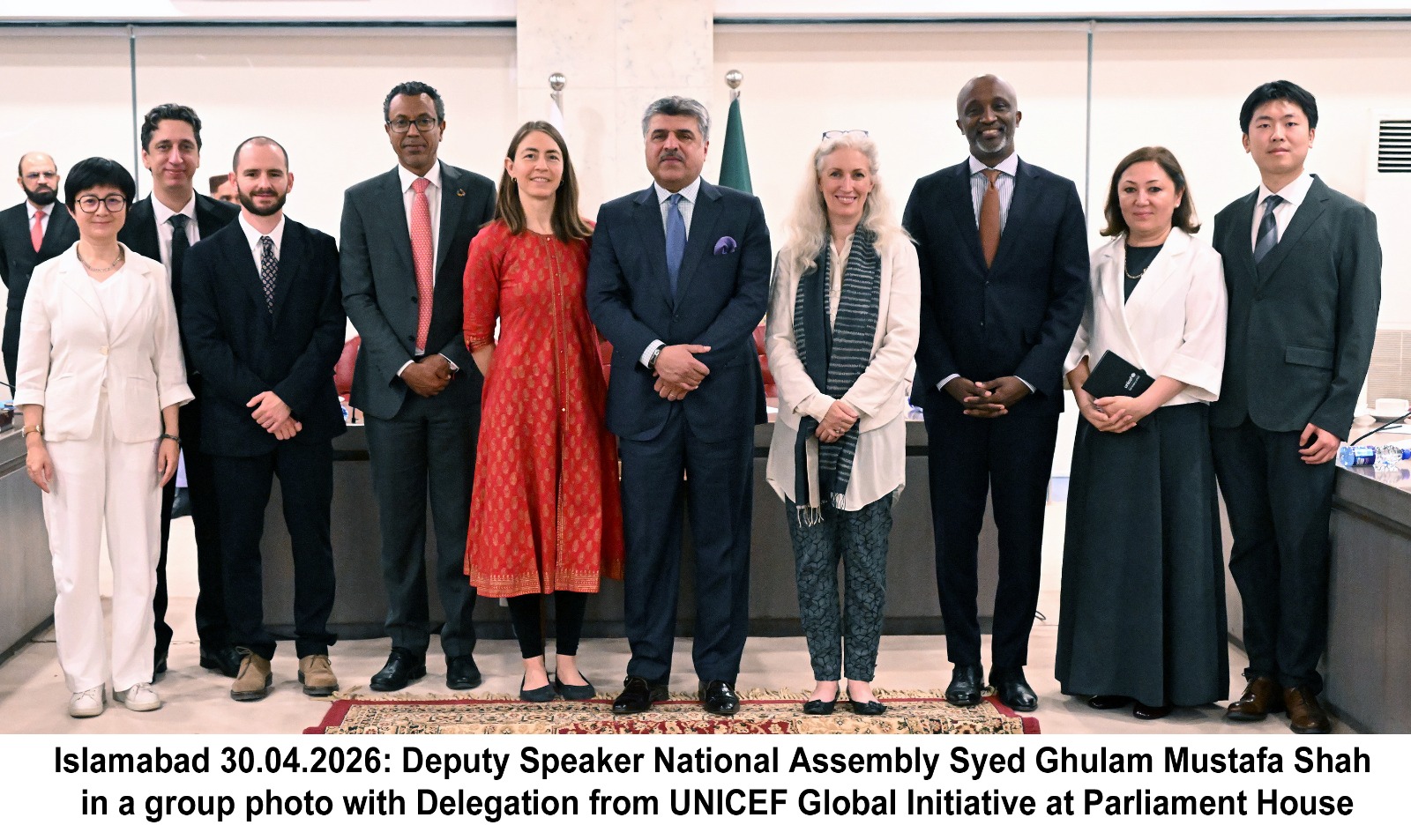
The Deputy Speaker welcomed the delegation and reaffirmed that the well-being, protection, and future of children remain a top national priority. He noted that children form a significant part of Pakistan’s population and stressed that national progress is closely linked with investments in their education, health, and development.
Highlighting key challenges, Deputy Speaker said millions of children still face barriers in accessing quality education, healthcare, and nutrition. He called for ensuring that every child is in school, protected from violence and exploitation, and provided with essential services. He also noted progress in polio eradication efforts, crediting sustained vaccination campaigns and strong institutional coordination, while stressing the need for continued vigilance. He further highlighted childhood lead exposure as a serious public health concern, noting its irreversible effects on cognitive development and long-term health and economic outcomes. He emphasized the need to address sources of exposure, including industrial emissions, informal recycling, lead-based paints, and contaminated consumer products.
The UNICEF delegation appreciated Pakistan’s efforts in improving child welfare, particularly in immunization and polio eradication. They emphasized continued investment in education, nutrition, child protection, and environmental health, and reaffirmed UNICEF’s commitment to support Pakistan through technical assistance and field-level interventions.
The Deputy Speaker appreciated UNICEF’s continued support and reaffirmed Parliament’s commitment to strengthening legislation, oversight, and coordination to ensure better outcomes for children.
Convener Parliamentary Caucus on Child Rights (PCCR), MNA Dr. Nikhat Shakeel, also joined the meeting virtually and appreciated UNICEF’s engagement in advancing child rights, reaffirming the Caucus’s commitment to strengthening related legislative and policy efforts.
The meeting concluded with a shared resolve to further strengthen cooperation between Pakistan and UNICEF for the protection, education, and well-being of children.
قومی اسمبلی سیکرٹریٹ
ڈائریکٹوریٹ جنرل آف میڈیا
پریس ریلیز
ڈپٹی اسپیکر قومی اسمبلی سید غلام مصطفٰی شاہ سے یونیسف کے وفد کی ملاقات
اسلام آباد:30 اپریل 2026: اقوامِ متحدہ کے ادارہ برائے اطفال (یونیسف) کے ایک وفد نے پارلیمنٹ ہاؤس، اسلام آباد میں ڈپٹی اسپیکر قومی اسمبلی سید غلام مصطفٰی شاہ سے ملاقات کی، جس میں بچوں کے حقوق، تعلیم، صحت اور تحفظ سے متعلق امور پر تبادلۂ خیال کیا گیا۔ اس موقع پر پارلیمانی کاکس برائے حقوقِ اطفال کی چیئرپرسن نگہت شکیل بھی موجود تھیں۔ ڈپٹی اسپیکر قومی اسمبلی نے وفد کا خیرمقدم کرتے ہوئے اس بات پر زور دیا کہ بچوں کی فلاح و بہبود قومی ترجیحات میں سرفہرست ہے اور اس سلسلے میں پارلیمان کلیدی کردار ادا کر رہی ہے۔
ملاقات کے دوران ڈپٹی اسپیکر قومی اسمبلی نے پاکستان میں بچوں کو درپیش اہم چیلنجز پر روشنی ڈالتے ہوئے کہا کہ اب بھی لاکھوں بچے معیاری تعلیم، صحت کی سہولیات اور مناسب غذائیت سے محروم ہیں۔ انہوں نے اس امر کی اہمیت پر زور دیا کہ ہر بچے کو اسکول میں داخلہ، تشدد اور استحصال سے تحفظ، اور بہتر صحت و غذائیت کی سہولیات فراہم کی جائیں۔ انہوں نے پولیو کے خاتمے کی کوششوں میں ہونے والی پیش رفت کو سراہا، تاہم مکمل خاتمے کے لیے مسلسل کوششوں کی ضرورت پر بھی زور دیا۔
ڈپٹی اسپیکر قومی اسمبلی نے بچوں میں سیسے (لیڈ) کے بڑھتے ہوئے اثرات کے مسئلے کی جانب بھی توجہ دلائی اور اسے ایک سنگین مگر اکثر نظرانداز کیا جانے والا عوامی صحت کا مسئلہ قرار دیا۔ انہوں نے کہا کہ عالمی سطح پر سیسے کے اثرات کی کوئی محفوظ حد نہیں ہے اور خاص طور پر کم اور متوسط آمدن والے ممالک میں بچوں کی بڑی تعداد اس سے متاثر ہو رہی ہے۔ پاکستان میں صنعتی اخراج، غیر رسمی ری سائیکلنگ، سیسے پر مشتمل پینٹس، آلودہ غذائی اشیاء اور روایتی کاسمیٹکس جیسے سرمہ بچوں کے خون میں سیسے کی مقدار بڑھانے کا سبب بن رہے ہیں۔ انہوں نے خبردار کیا کہ اس کے نتیجے میں ذہنی نشوونما کو ناقابلِ تلافی نقصان پہنچ سکتا ہے، تعلیمی کارکردگی متاثر ہو سکتی ہے اور طویل المدتی صحت و معاشی مسائل جنم لے سکتے ہیں، جو قومی پیداوار اور انسانی وسائل پر بھی منفی اثر ڈالتے ہیں۔
 Print
Print